Stress relief hacks: My go-tos for calm vibes ✨
You know that feeling when your shoulders are practically touching your earlobes, your jaw aches from clenching, and your brain feels like a browser with ninety-seven tabs open? Modern life has turned low-grade tension into our default setting. We scroll through curated perfection, juggle endless responsibilities, and run on a fuel of caffeine and cortisol, wondering why we feel so permanently frazzled.
I hit my own breaking point last year. My stress wasn't the dramatic, life-altering kind; it was the slow-burn variety that saps your joy and makes you snap at the people you love most. I realized that waiting for a two-week vacation to "de-stress" was a flawed strategy. I needed a toolkit of immediate, accessible practices I could use daily to hit the reset button. After a ton of trial and error, these are the non-negotiable hacks that genuinely bring back the calm vibes.
The Two-Minute Breathing Reset
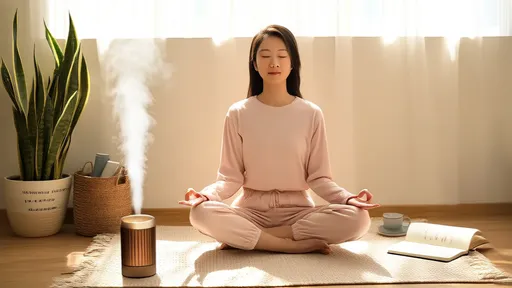
Before you roll your eyes and think "not another person telling me to breathe," hear me out. This isn't about taking a few deep breaths. It's a specific, physiological technique called box breathing that signals safety to your nervous system. The pattern is simple: inhale for four counts, hold for four, exhale for four, hold for four. That's one box. Repeat for two minutes.
I use this before a big meeting, after a frustrating email, or when I'm stuck in traffic. It’s my secret weapon because it’s utterly discreet. You can do it at your desk, in your car, or in a crowded store, and no one will know. The magic is in the hold; it gives your body a moment to fully absorb the oxygen and slows your heart rate. I pair it with a simple mantra on the exhale, like "I am calm" or "I release this." It’s a total game-changer for short-circuiting the stress response before it spirals.
The "Brain Dump" Journaling Method
When my mind is racing at 3 a.m., it's usually because it's trying not to forget something. Our brains are terrible offices but brilliant idea generators. Trying to use them for storage creates immense cognitive load and anxiety. The solution? A nightly brain dump. This isn't a beautifully curated diary; it's a messy, chaotic transfer of everything in your head onto paper.
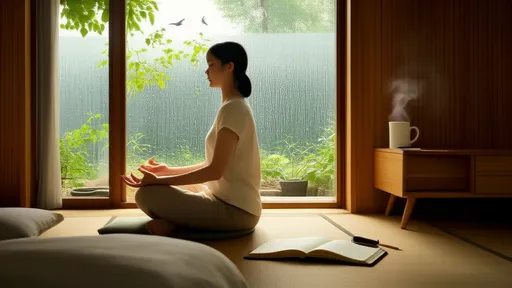
Here’s my no-fail method: Grab any notebook. Set a timer for five minutes. Write down every single thing on your mind—from "call plumber" to "what if I fail at my presentation?" to "we're out of milk." Don't judge, don't organize, just download. The goal is to empty the cache. A common mistake is trying to make it pretty or logical. The power is in the purging. When the timer goes off, close the notebook. You've just told your brain, "It's safe to let go. I've captured it all." I sleep infinitely better on the nights I do this.
Sensory Grounding for Instant Anchoring
Anxiety often pulls us into the future with "what-ifs," while stress can trap us in past regrets. The only place we can find calm is the present moment, and the fastest way to get there is through our senses. This technique, called the 5-4-3-2-1 method, forces your brain to engage with your immediate environment.
Wherever you are, pause and silently identify: Five things you can see (the pattern on the carpet, a crack in the ceiling). Four things you can feel (the texture of your shirt, the chair against your back). Three things you can hear (the distant hum of a fridge, a bird outside). Two things you can smell (your coffee, the air after rain). One thing you can taste (the lingering mint of gum, the taste of your own mouth). It sounds almost too simple, but it works because it’s a cognitive distraction that demands focus. I use this when I feel a panic attack creeping in or when I'm so overwhelmed I can't think straight. It brings me back to my body and out of the chaos in my head.
Creating a Personal Decompression Ritual
Beyond these in-the-moment hacks, you need a daily ritual that acts as a circuit breaker between "work mode" and "home mode." For years, I'd finish work and immediately dive into family time or chores, bringing all my work stress with me. My ritual is now a 15-minute block that tells my body and mind the workday is over.
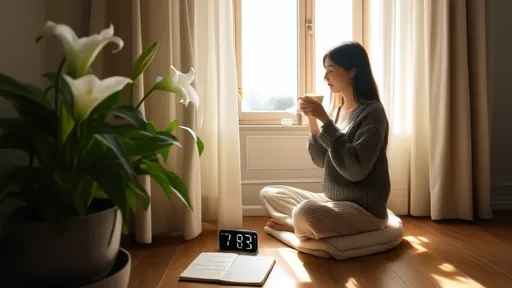
For me, this involves brewing a cup of herbal tea (no caffeine!), changing out of my work clothes, and sitting in my favorite chair without my phone. Sometimes I just stare out the window. That's it. The key is consistency, not complexity. Your ritual could be a short walk around the block, five minutes of stretching, or even just watering your plants. The activity itself matters less than the intentional act of transitioning. It creates a psychological boundary that prevents the day's stress from contaminating your evening.
Beyond the Quick Fix: The Long Game of Stress Resilience
While these hacks are brilliant for managing stress in the moment, it's crucial to acknowledge that they are bandaids, not cures. If your life is a constant five-alarm fire, no amount of box breathing will put it out. The real work lies in building stress resilience—the capacity to handle pressure without crumbling.
This is the deeper, less glamorous work. It means auditing your life for chronic stressors. Are you saying "yes" when you mean "no"? Are you consuming news or social media that leaves you feeling drained and inadequate? Are you getting enough quality sleep? For me, building resilience meant setting firmer boundaries with my time and finally prioritizing seven hours of sleep. It’s not as exciting as a two-minute hack, but it’s the foundation that makes those hacks effective. When you're well-rested and living in alignment with your values, you have a much larger buffer for life's inevitable pressures.
Managing stress isn't about achieving a state of permanent Zen; it's about building a reliable toolkit that helps you navigate the storms. It's the small, consistent practices—the conscious breath, the purging of mental clutter, the intentional pause—that rebuild your sense of agency over your own well-being. Start with just one of these practices today. Your nervous system will thank you.